
Outdoor clothing. Personal style.
WHAT IS
GORPCORE?
Style in the mountains and beyond. Where gorpcore began, the pieces behind the look, and how to wear them.
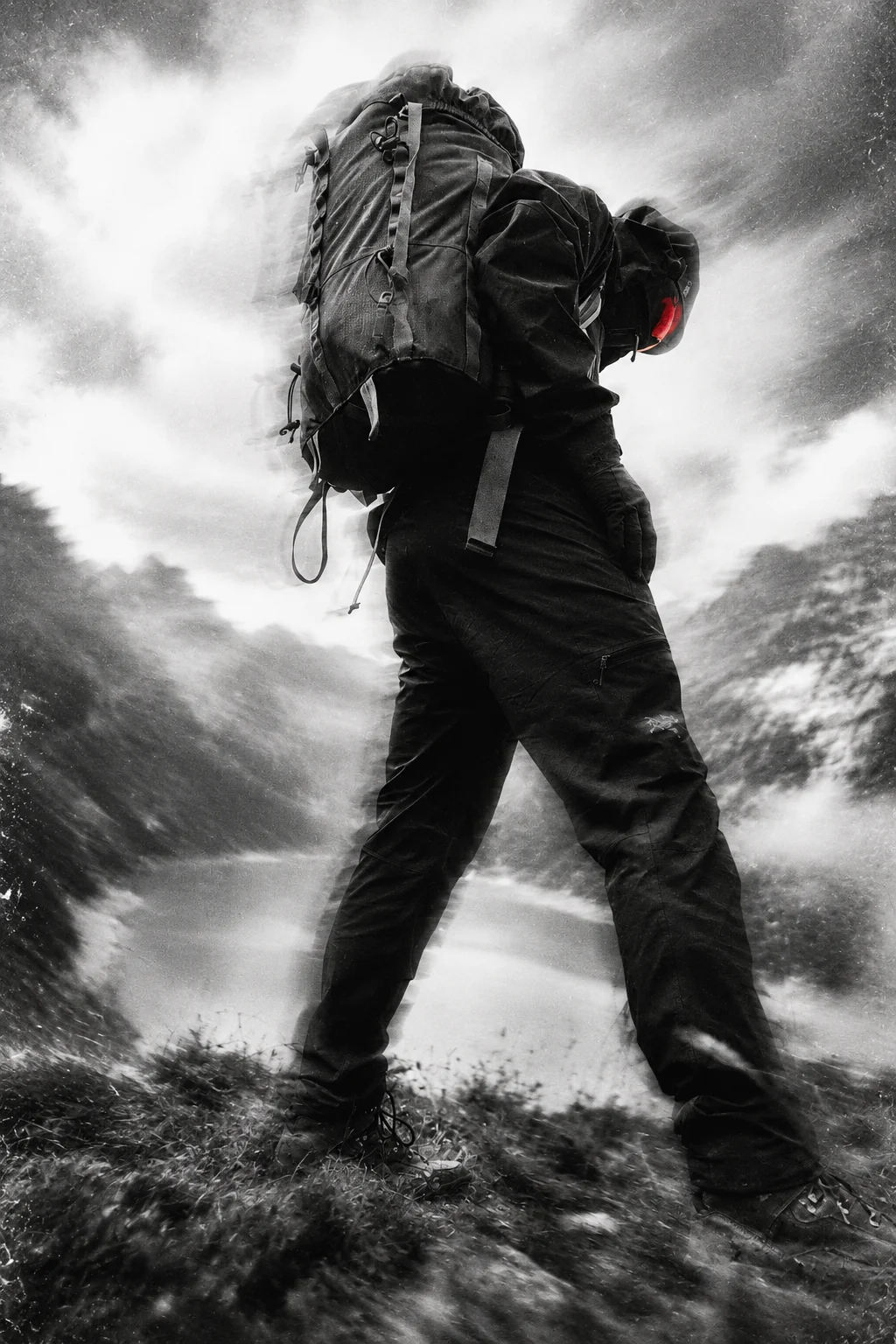
The meaning
Style belongs in the mountains.
Gorpcore brings outdoor clothing and personal style together. Shell jackets, fleeces, hiking trousers and trail shoes form the wardrobe. How you combine their shapes, textures and colours gives it your own look, on the mountain and beyond.
The name comes from gorp, a term for the trail mix hikers carry.[1] For us, the mountains are central to the style: a shell layered over a fleece, trousers that sit well over trail shoes, coloured lenses under a cap. What you wear needs to work for the day outside, and there is room to care about how it looks.
Those details do a lot of the styling. A drawcord changes the shape of a jacket. A high collar frames the face. A heavily treaded shoe gives the bottom of an outfit some weight. Gorpcore becomes interesting when you pay attention to how these pieces sit together.
Where it started
The clothes came before the name.
Jason Chen introduced the name in The Cut on 25 May 2017.[2] The clothing, and the interest in how it looked, had a much longer history. From technical fleece and alpine shells to Virgil Abloh’s runway, these moments help trace the relationship between mountain equipment and fashion.
- 1985
Patagonia Snap-T
The Snap-T began as a technical fleece. Its contrasting trims, chest pocket and shoulder yoke became recognisable parts of the design.[3] A fleece adds a soft, visibly textured surface to an outfit full of smooth nylon.
- 1992
The North Face Nuptse
The Nuptse launched as part of an alpine layering system. Supreme’s first Nuptse collaboration followed in 2011, years before the term gorpcore appeared.[4] Its broad, padded shape makes outerwear the dominant part of an outfit.
- 1998
Arc’teryx Alpha SV
The Alpha SV launched in 1998. Its GORE-TEX construction, narrow seam tape and reduced bulk came from solving practical problems in outerwear.[5] Arc’teryx’s mountain focus remained central as its clothing found an audience in streetwear.[8] That is part of its appeal within gorpcore: the clean lines and distinctive shell silhouette carry the identity of actual climbing equipment.
- 2013
Salomon XT-6
Developed with trail runners, the XT-6 arrived in 2013 and entered Salomon’s Sportstyle range in 2018.[6] The layered upper, quick-lacing system and substantial sole give it a very different presence from a plain leather trainer.
- 2020
Virgil Abloh brings Arc’teryx to the runway
For Off-White’s Autumn/Winter 2020 womenswear show, Virgil Abloh combined Arc’teryx performance jackets with tulle gowns. Presented in Paris on 27 February, the looks placed technical outerwear directly alongside high fashion.[7] For us, this is a telling moment in gorpcore’s cultural history: the proportions and construction of mountain clothing were being treated as design worth studying on their own terms.
These were Abloh’s reinterpretations. Arc’teryx confirmed that the show was not an official collaboration.[8]
The connection runs through the clothes themselves: a roomy fleece, a boxy puffer, a sculpted shell, a visibly technical shoe. Abloh’s runway offers one interpretation; putting together an outfit for a day in the mountains offers another. You can work with these proportions and materials across different brands and budgets.
The clothes & details
What makes the look work?
A good starting point is one outdoor piece with a strong shape. Build around its length, volume and texture before adding more equipment.
- A shell with some room
- A slightly boxy jacket leaves space for a fleece and keeps the outline relaxed. Cinching the hem a little brings the volume towards the waist. Avoid pulling every adjuster tight; the fabric should still fall naturally.
- Trousers that meet the shoe
- A straight or wide leg works well with a substantial trail sole. Aim for a small break at the front, with the heel clear of the ground. Too much fabric pooled at the ankle hides the shoe and makes the lower half feel heavy.
- Different surfaces
- Black fleece, matte trousers and a crisp shell each catch light differently. That variation keeps an all-black outfit readable. With similar smooth fabrics from head to toe, the layers can merge into one flat shape.
- One deliberate accent
- Choose where the eye goes: coloured lenses, a bright fleece collar or a small bag. Red against charcoal is our preference. A second, competing bright piece usually makes the first feel less intentional.
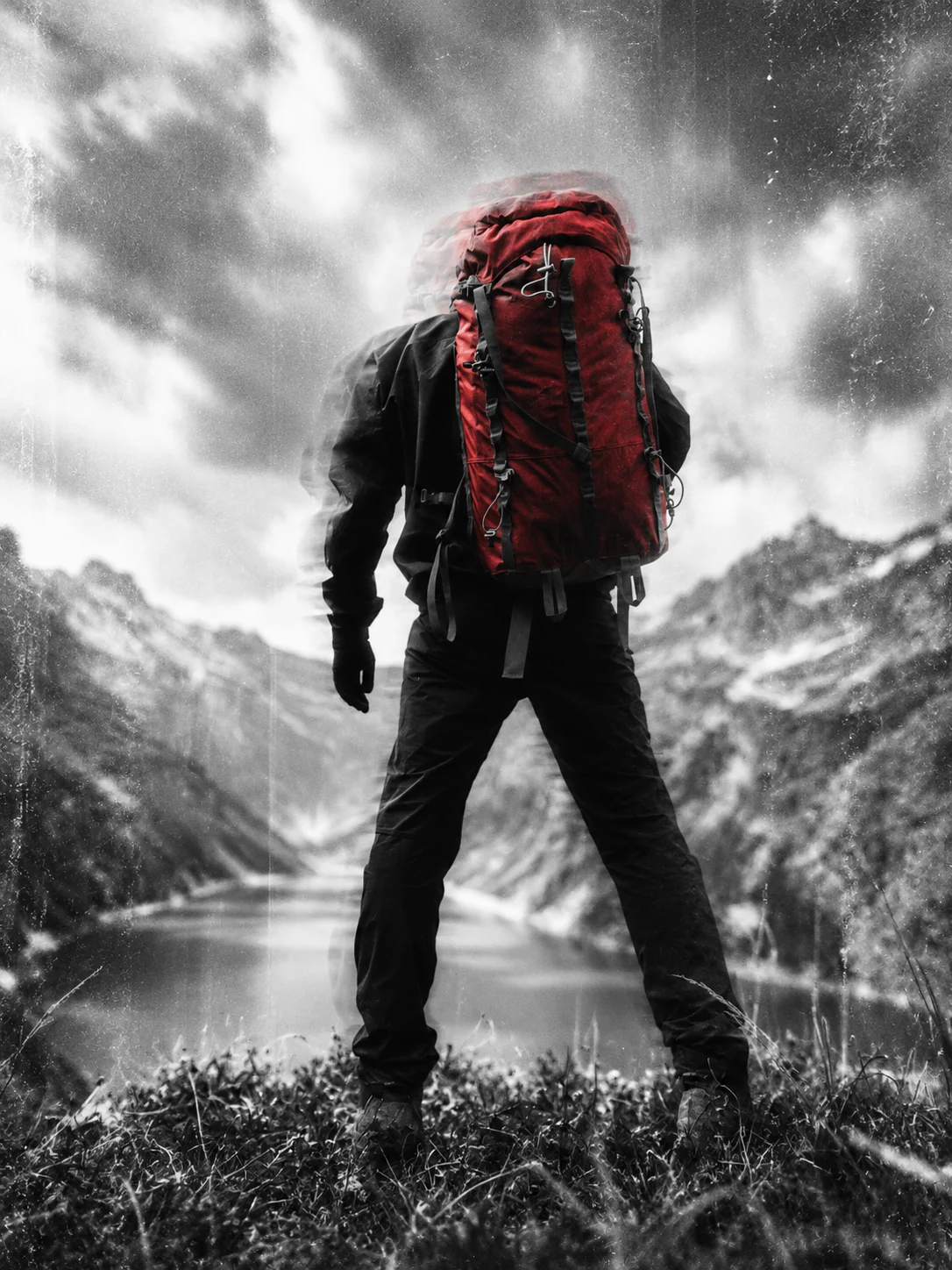
one place to go.The red pack carries the colour. The surrounding black layers keep their shape through texture and light.
Three outfits
How to wear gorpcore, piece by piece.
These combinations explore the look from a day outdoors to everyday wear. Start with the clothing your plans and the weather call for, then work with its proportions, textures and colour.
Black shell, wide trousers, mirrored lenses.
Hip-length shell + base layer + straight or wide hiking trousers + trail shoes + wraparound sunglasses
Keep the jacket around hip length so it leaves a long line through the trousers. Use a matte black or charcoal fabric below, then add coloured lenses close to the face. Leave the base layer mostly hidden; several hems at different lengths can make this otherwise simple outfit busy.
A cap, high collar and wraparound frame create a strong shape around the head. For a day on the mountain, build the outfit around the layers and pack you need; their proportions are part of the look.
Fleece, denim, trail runners.
Textured fleece + white tee + straight jeans + low-cut trail shoes
This is the easiest combination to build from an existing wardrobe. Dark, straight denim gives a colourful fleece room to stand out. Wear the fleece open at the neck and keep the jean hem just above the ground, with the front resting lightly on the shoe.
If the fleece has contrasting panels, pick up one of those colours in the footwear. A plain cap finishes it without adding another focal point.
Light layers for warmer days.
Loose tee + nylon shorts + crew socks + trail shoes + a cap
Choose shorts with enough width through the thigh to balance the shoes. Let a little sock show and keep the tee around the top of the pockets. A cap and sunglasses bring the outdoor references up towards the face.
Carry a light layer for later if needed. You can get the same visual language from fabric, footwear and accessories when it is too warm for a shell or fleece.
Dressing for the weather
Understand what the layers do.
Outdoor layering gives each piece a role: the base layer manages sweat, the middle layer retains warmth, and the outer shell protects against wind and rain. A fleece supplies insulation but generally lets wind through; a shell can provide weather protection without much warmth of its own.[9]
On a mountain day, your layers need to work together as conditions change. Leave room for insulation under the outer layer and try the combination with your arms forward: tight shoulders and sleeves that drag the inner layer upwards are signs the pieces do not fit comfortably together. You can then adjust hems, collars and colour to give the outfit its shape.
The three outfits above are styling suggestions. For a mountain day, choose clothing for the forecast, terrain and time outside. A technical-looking fabric or a hiking silhouette alone tells you little about its weather protection.
What to buy first
Build around the piece you already wear.
If you own a rain jacket, start there. Try it with your best-fitting trousers and change the shoes. If you already wear trail runners, try them under a wider hem before buying another pair. A change in proportion often does more for an outfit than another logo.
For a first purchase, think about the gap in your wardrobe. A fleece changes texture and works with jeans. A pair of trail shoes changes the weight of the whole silhouette. Wraparound sunglasses add a smaller, sharper detail while letting you keep the rest of your clothes.
Second-hand fleeces and straightforward outdoor trousers are worth considering. Check measurements against something you own, especially jacket length and trouser opening. Inspect worn items for damage and working closures. For equipment you will rely on outdoors, condition and suitability matter as much as the look.
A few questions
The details people ask about.
Is gorpcore the same as techwear?
They overlap. Our way of distinguishing the looks is to consider the reference: gorpcore draws visibly on hiking and camping, while techwear styling often pushes towards an urban, engineered silhouette. A black technical jacket can work in either. Colour alone does not settle it; the cut, footwear and other pieces change how it reads.
Is gorpcore only about wearing hiking clothes in town?
No. For GORPED, the mountains are central to it. Choosing how your layers sit, pairing colours and adding a distinctive accessory are part of getting dressed for a hike, too. Those same pieces can stay in your everyday wardrobe; you do not have to hike to enjoy the style.
Does gorpcore have to be expensive?
No. Recognisable brands offer useful references, but the look comes from the combination. A used fleece, everyday trousers and one well-chosen outdoor accessory can make a more considered outfit than a full set of new technical clothing.
The GORPED take
Black layers. Red at eye level.
We like getting dressed for the mountains. A cap, a high collar and the line of a wraparound lens give the face a strong outline. Keep the clothing loose enough to show movement, with one clear accent above the darker layers.
Strider in Ember is the piece we use for that flash of red-orange. The mirrored lens gives a small part of the outfit a strong presence. Glacier brings blue into the same combination; Shadow keeps it monochrome.